
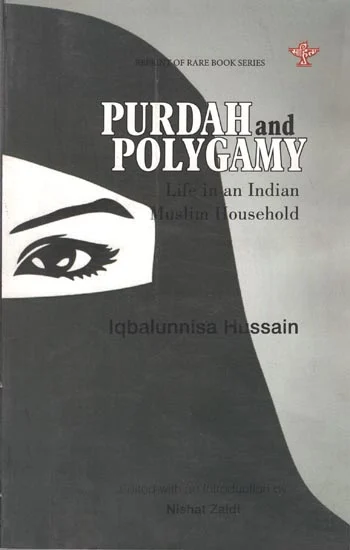
Purdah and Polygamy: Life in the Indian Muslim Household
By Nishat Zaidi
Iqbalunnisa Hussain’s novel originally published in 1944 has received much less attention than the works of her other counterparts such as Zeenat Futehally, and Attia Hosain. Written at a time when Indian woman’s Movement had already taken a political turn and Indian women had begun making forceful demands for suffrage, political autonomy and other legal and political rights, Iqbalunnisa’a novel makes an intervention in discourses on ‘muslim woman’s question’ from the perspective of a Muslim woman. The double-voiced narrative told through the narratorial voice steeped in elements of irony, through which a voice within the voice can be heard, transforms zenana or the domestic space generally perceived as de-politicised sphere into a dynamic sphere embodying nationalist and communal politics